
ANTONI GAUDI: an interview
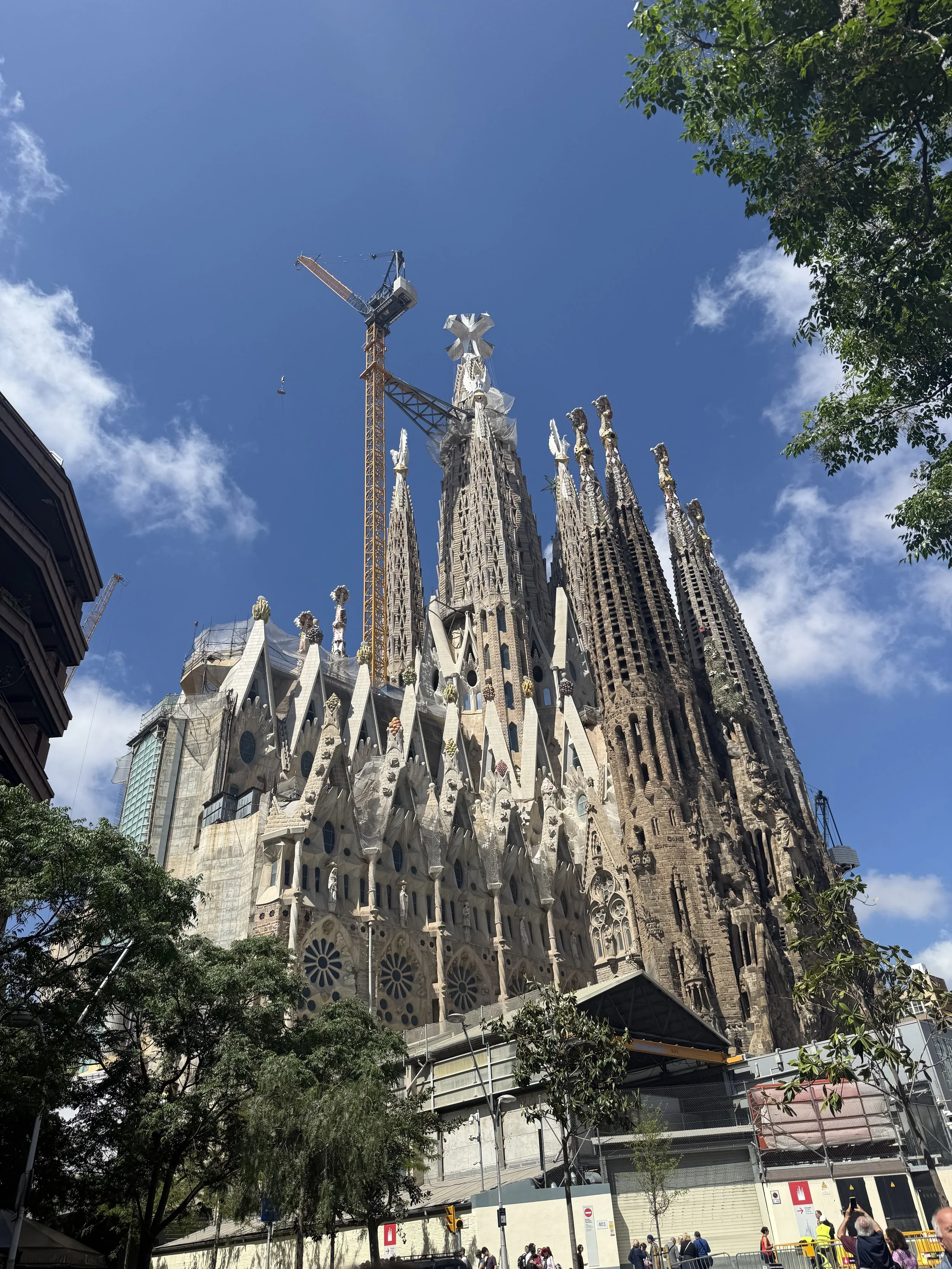
“God Left Instructions Everywhere”
Francesca: Antoni Gaudí! Welcome to 'How On Earth'! I can't believe you're here, in my house in Camiral, designed by another famous Spanish architect! How did you get here and what are your thoughts, almost a century after leaving this planet?
Antoni: Thank you so much for having me, I've been waiting for this opportunity for a long time. I flew in on Dragon Airways, courtesy of all the Romantasy authors who have been taking the world by storm these past few years. As you may know, I love nature, I have a wild imagination, so riding a dragon into your back garden was right up my alley. As for my thoughts, although I do not wish to offend you, I find your property far too symmetrical. I've been watching the evolution of architecture for some time, and everything is becoming so dreadfully boring. I hoped to inspire people to get a little funky, but you're still fixated on straight lines. Look around you; nature is never straight. Unfortunately, I think this evolution goes hand in hand with what your generation and those before you have been doing to the planet. You are going to have to stop destroying nature if you want to survive. And how can you expect to be inspired if everything around you is so flat and boring?
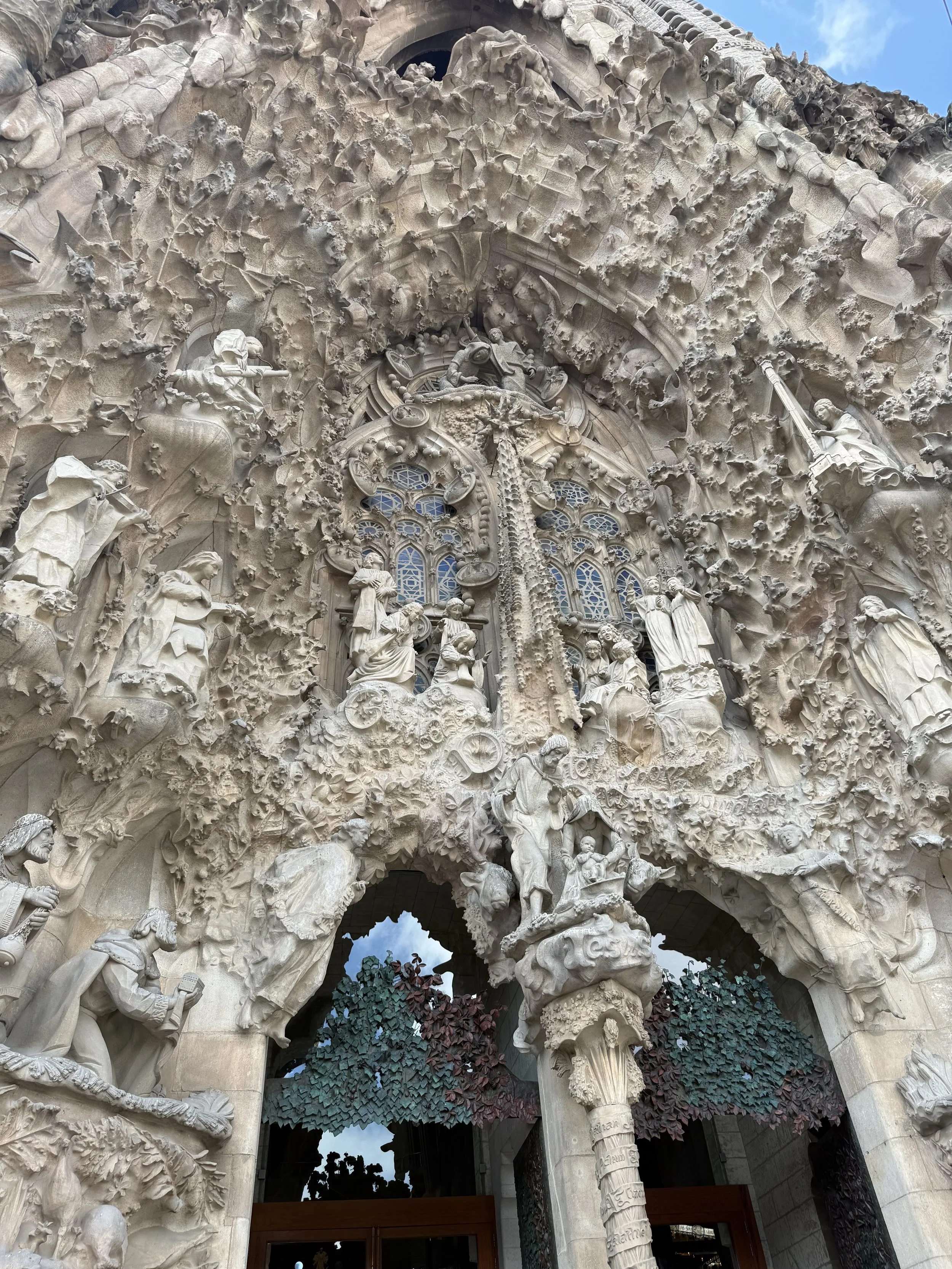
Francesca: You definitely have a point. As you probably know, I recently visited your Sagrada Família cathedral in Barcelona with a wonderful guide who was passionate about your work, pointing out all sorts of details I would never have noticed in such a short time. The mathematical details of how you worked everything out went right over my head of course, the only thing I recall being the fact that you chose the number 7.5 as the scale in which to work out your calculations, because 7 was considered good, and 8 was considered evil. You apparently conceived the entire cathedral using 7.5 as a reference.
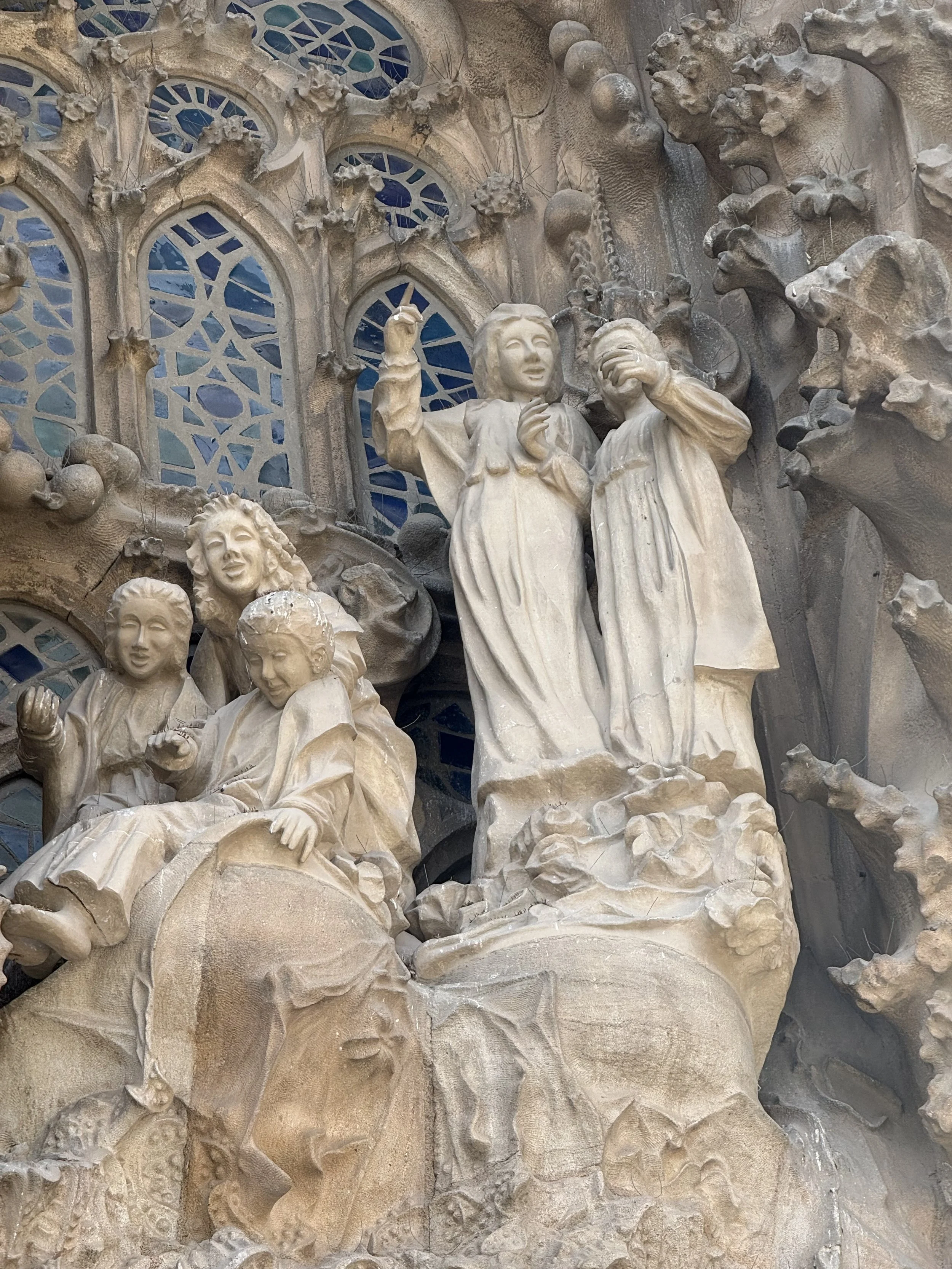
Antoni: Well, yes, sort of. I could go into lengthy explanations, but I know that you're dyscalculic, and the numbers would just turn into squiggles in your brain, and your eyes would go blank. That's not to say I dislike squiggles. I love them. The world needs far more squiggles. I indulged in some very satisfactory squiggling over the course of my life. The Sagrada Família is wonderfully squiggly, don't you think? Even the renovations of the sculptures made by my Japanese friend Etsuro Sotoo after the civil war are delightfully squiggly, which makes me very happy.
Francesca: I've read that you were considered eccentric.
Antoni: Pfff! I was not eccentric, I was just too busy talking to God and nature and designing beautiful things to worry about whether my trousers were crumpled, whether my shirt needed a wash, or whether it might be about time I shaved. If there's anything I regret, it is that I often would forget to eat. I got so thin that when I got run over by the tram on June 7, 1926 they thought I was a beggar and took me to the pauper’s hospital. I was lucky that someone eventually recognised me just before I died, as otherwise I'd have disappeared without a trace and been chucked into the communal pauper's grave. As it is, I'm quite happy in my own little crypt under the Sagrada Família! You should have come down to visit me.
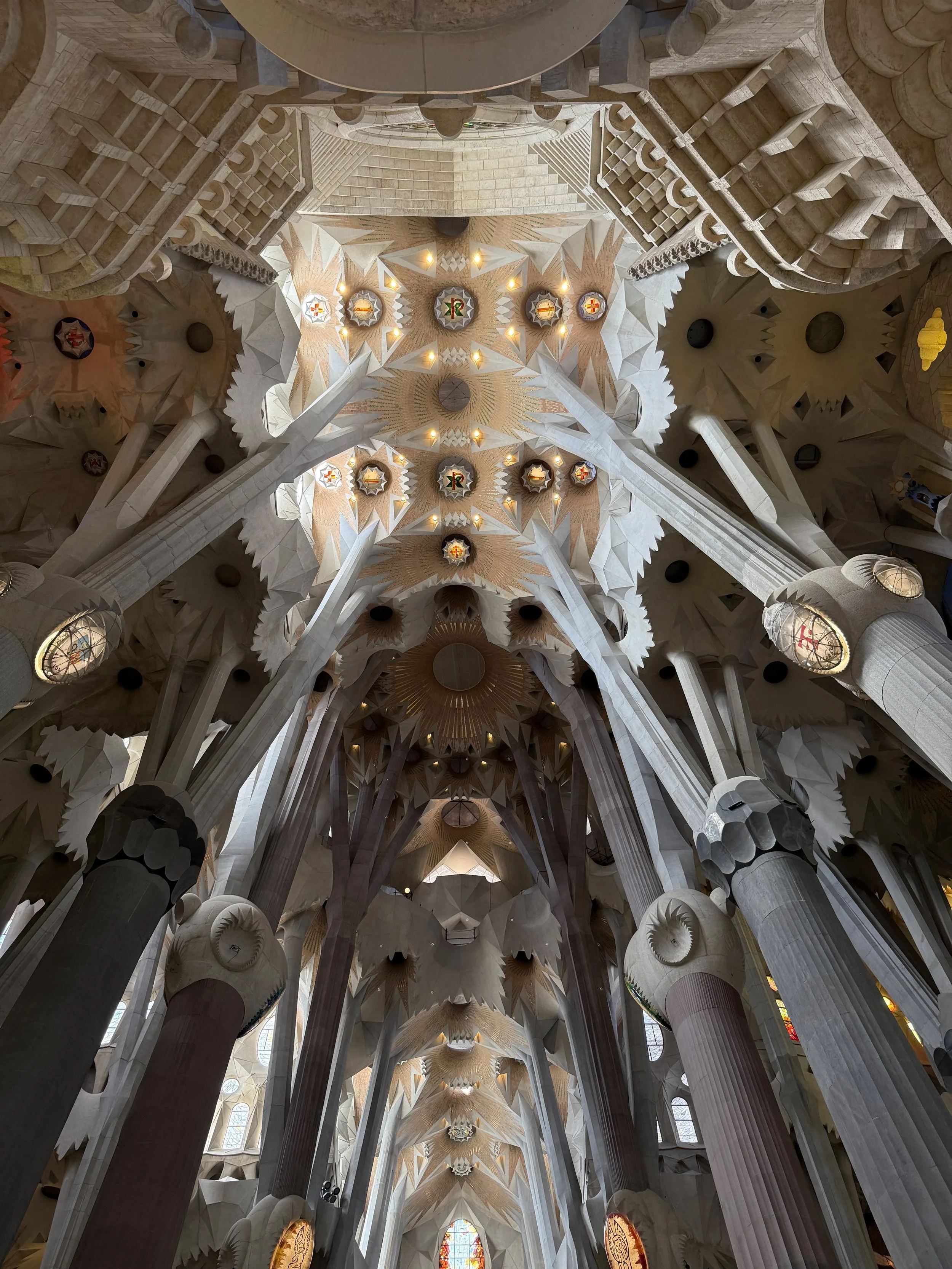
Francesca: Trust me, I wanted to visit everything in there. I wanted to take the lift to the top of one of the towers to see the view, and visit you, and wander around taking in all the incredible details, but my feet were killing me, my lower-leg bones were on fire, so I took a taxi back to the hotel. But I promise to come another time. I loved all the tiny carved insects and animals in the doors, and the music notes sculpted into the balcony upstairs where the choirboys sing! You thought of everything!
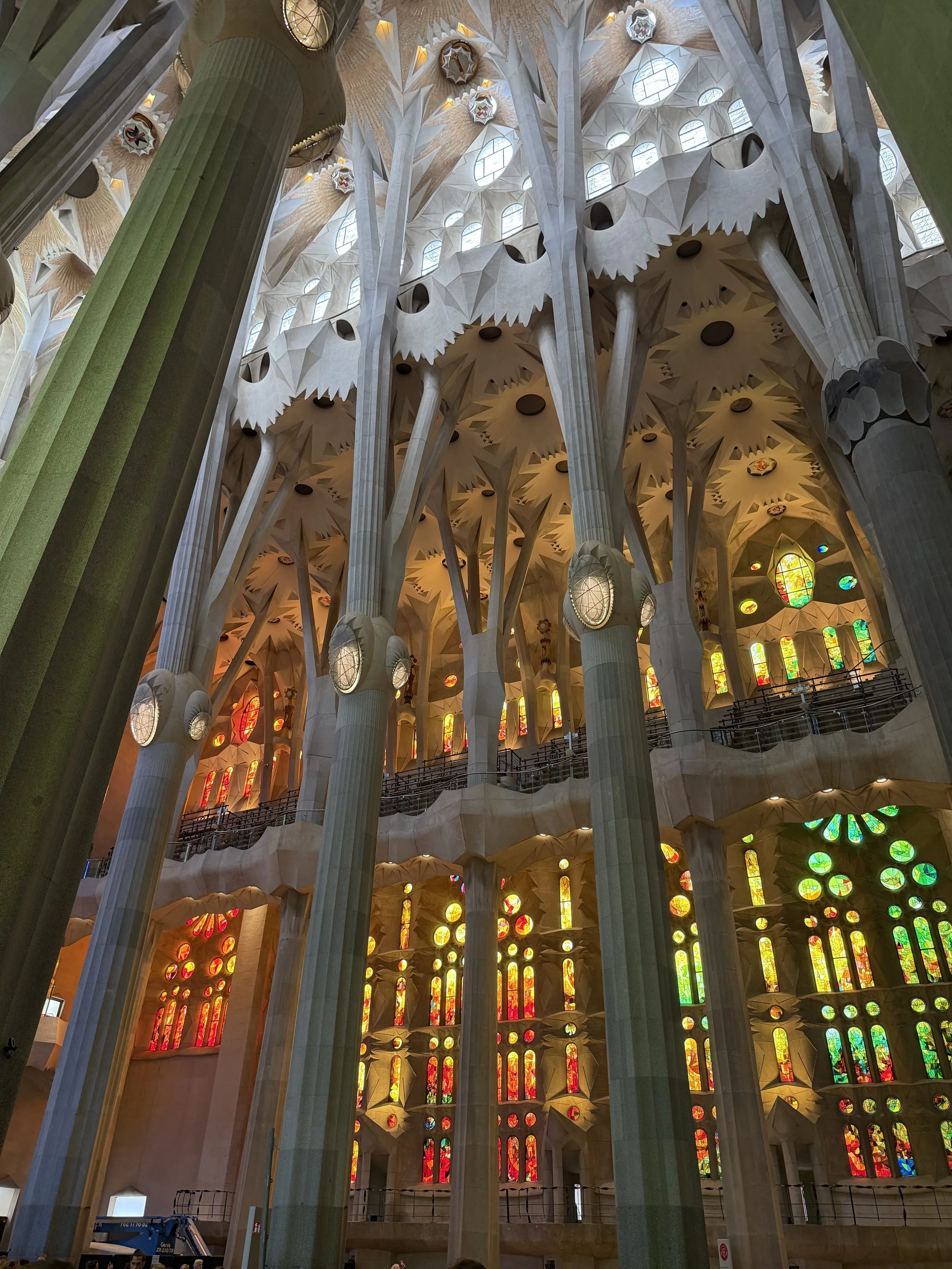
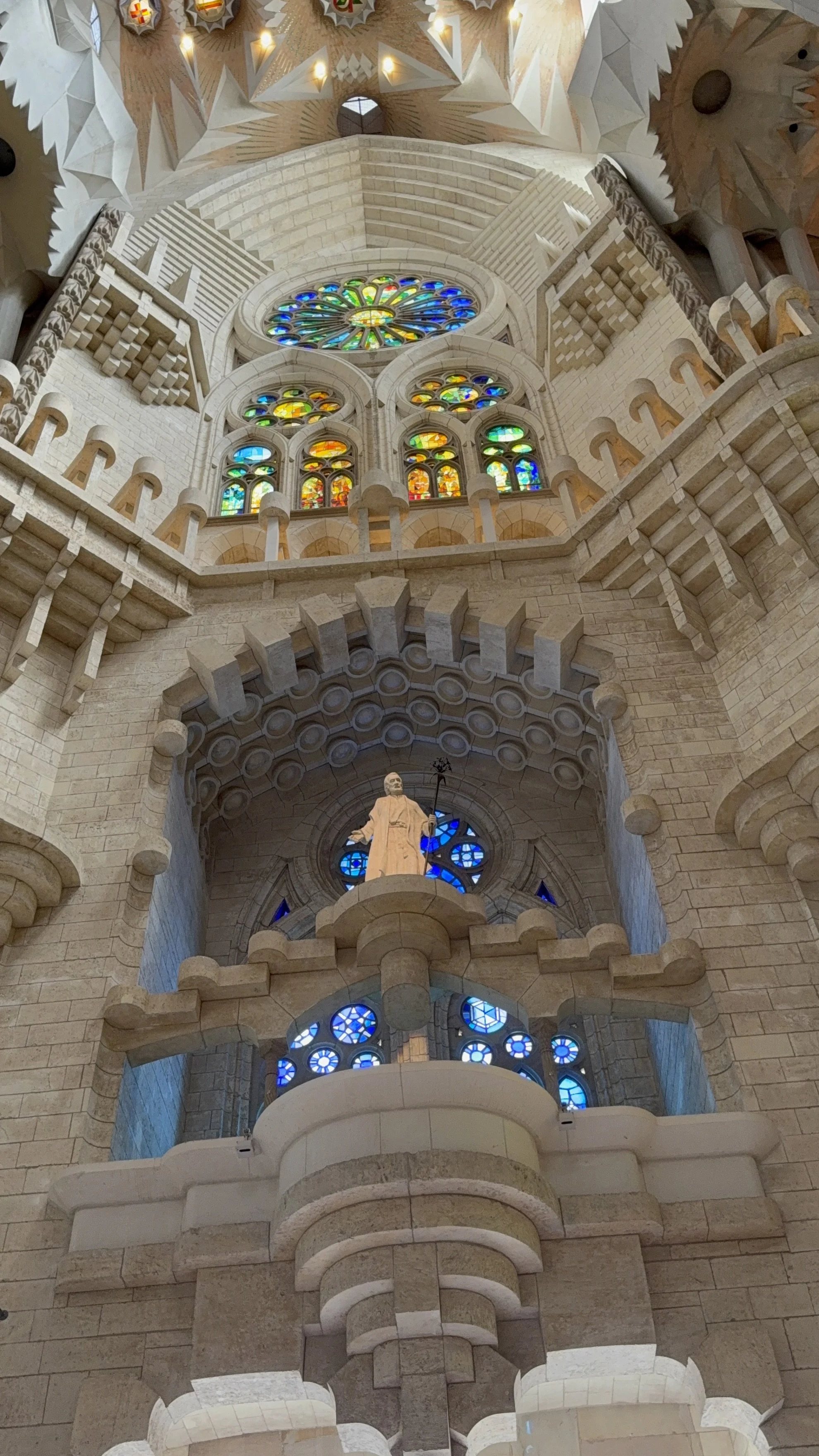
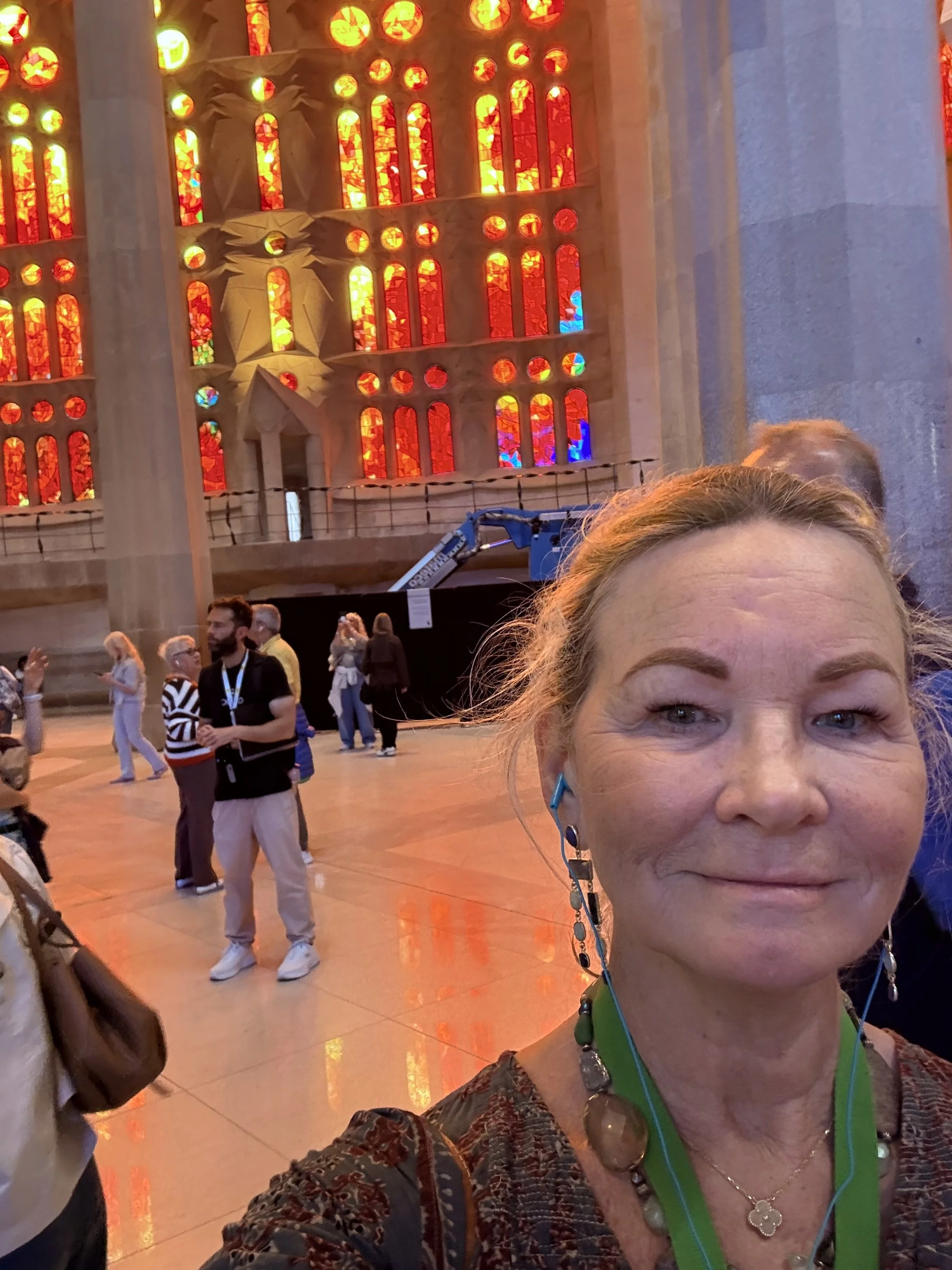
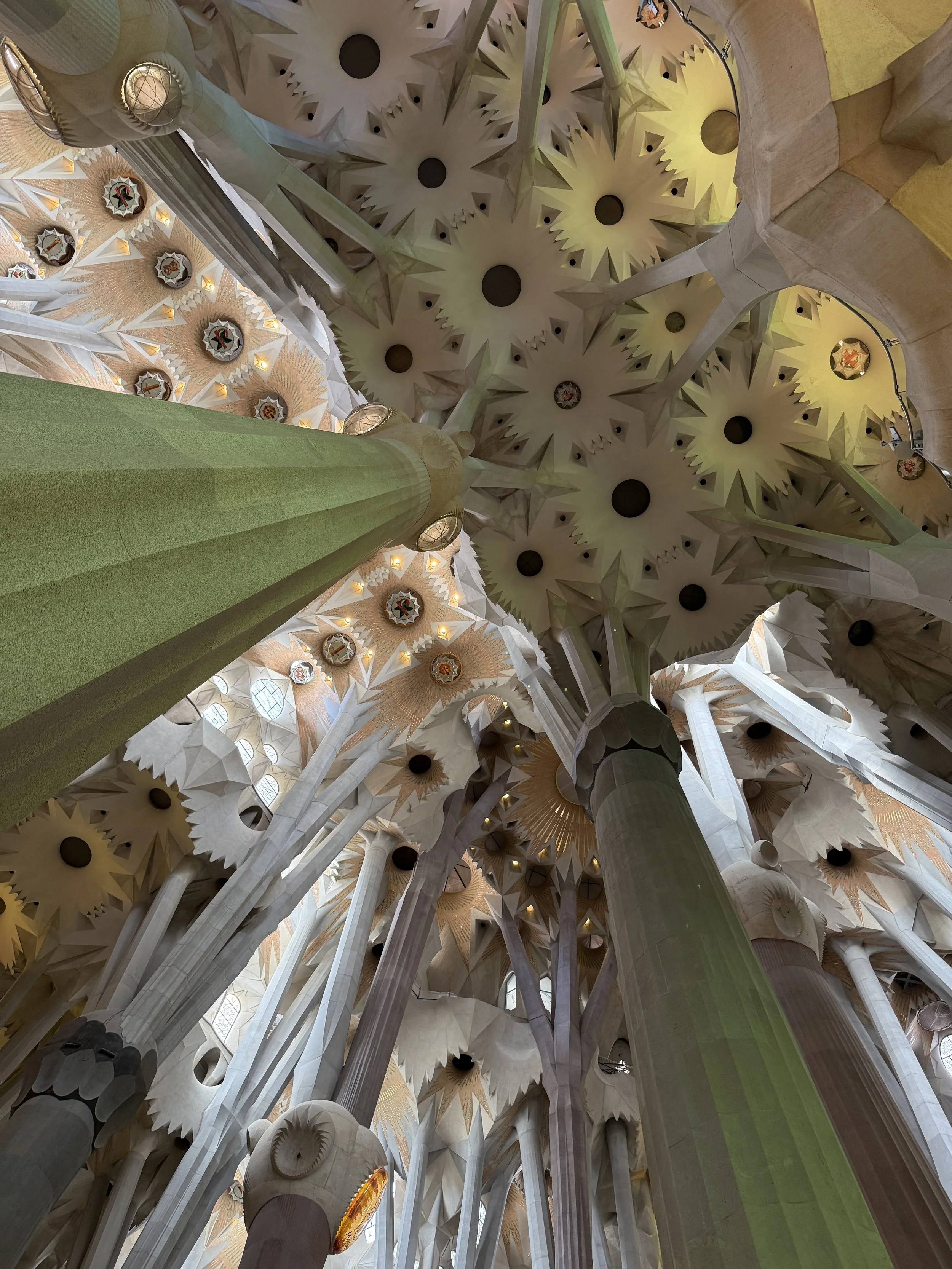
Antoni: I did my best. God whispered in my ears, suggesting a ladybird here, a bird there, maybe a bee to the left of a rooster, and a chameleon to the right of a snake. I had such fun imagining this magical home, working out the angles so that the morning sun shone through the stained glass on the east side, and then later shone through the warmer-toned stained glass on the west side. You saw how the sun turned the walls and pillars bright orange! I'm so happy it all worked according to my plans. I can't wait to see my project fully finished, with the grand stairway sweeping up to the huge, engraved front door. From what I gather it's probably going to take another ten years or so. But on June 10th this year, on the centenary of my death, Pope Leo is coming to inaugurate and bless the Tower of Jesus Christ and I am really looking forward to that. Will you be going?
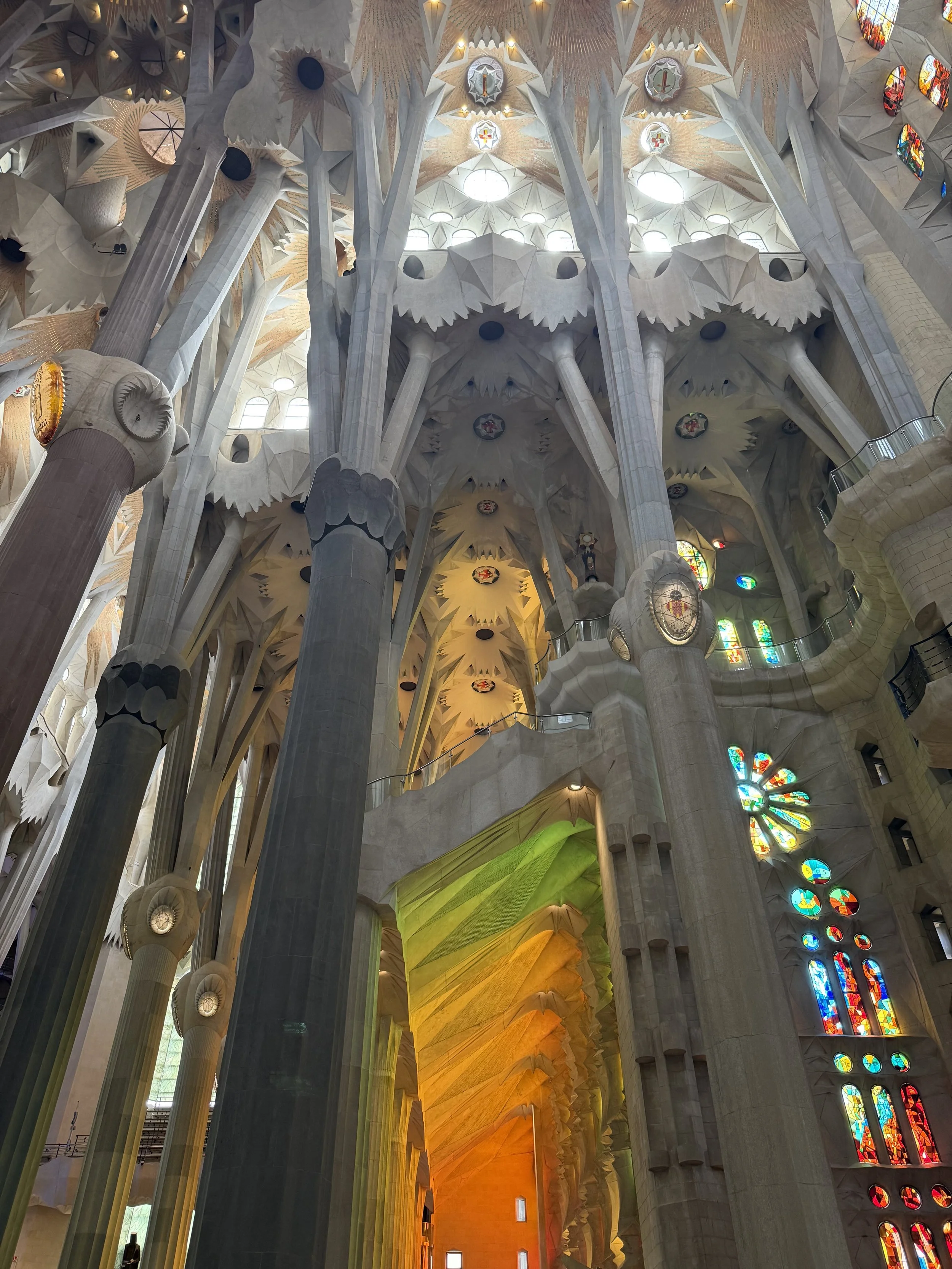
Francesca: Sadly, I won't be here when Pope Leo comes. But I will be seeing Ricky Martin in concert in Switzerland on June 24th! Same same but very different!
Antoni: They should hold a Ricky Martin concert in the cathedral; the acoustics in there are phenomenal. What a fiesta that would be! I'll put it to God's ear the next time I see him. God can get a little funky at times, as you've probably noticed, so he might be rather tickled by the idea.
Francesca: I know you never married, but were you ever in love? Do you regret not having a family of your own?
Antoni: Oh, I was hopelessly in love. Her name was Josefa Moreu. I asked her to marry me, but she said no. I was heartbroken, and threw myself even deeper into my work. La Sagrada Família became my family, and her columns and spires became my children.
Francesca: Speaking of the Sagrada Família; you spent 40 years of your life working on this project, and yet it still isn't finished. Does this bother you?
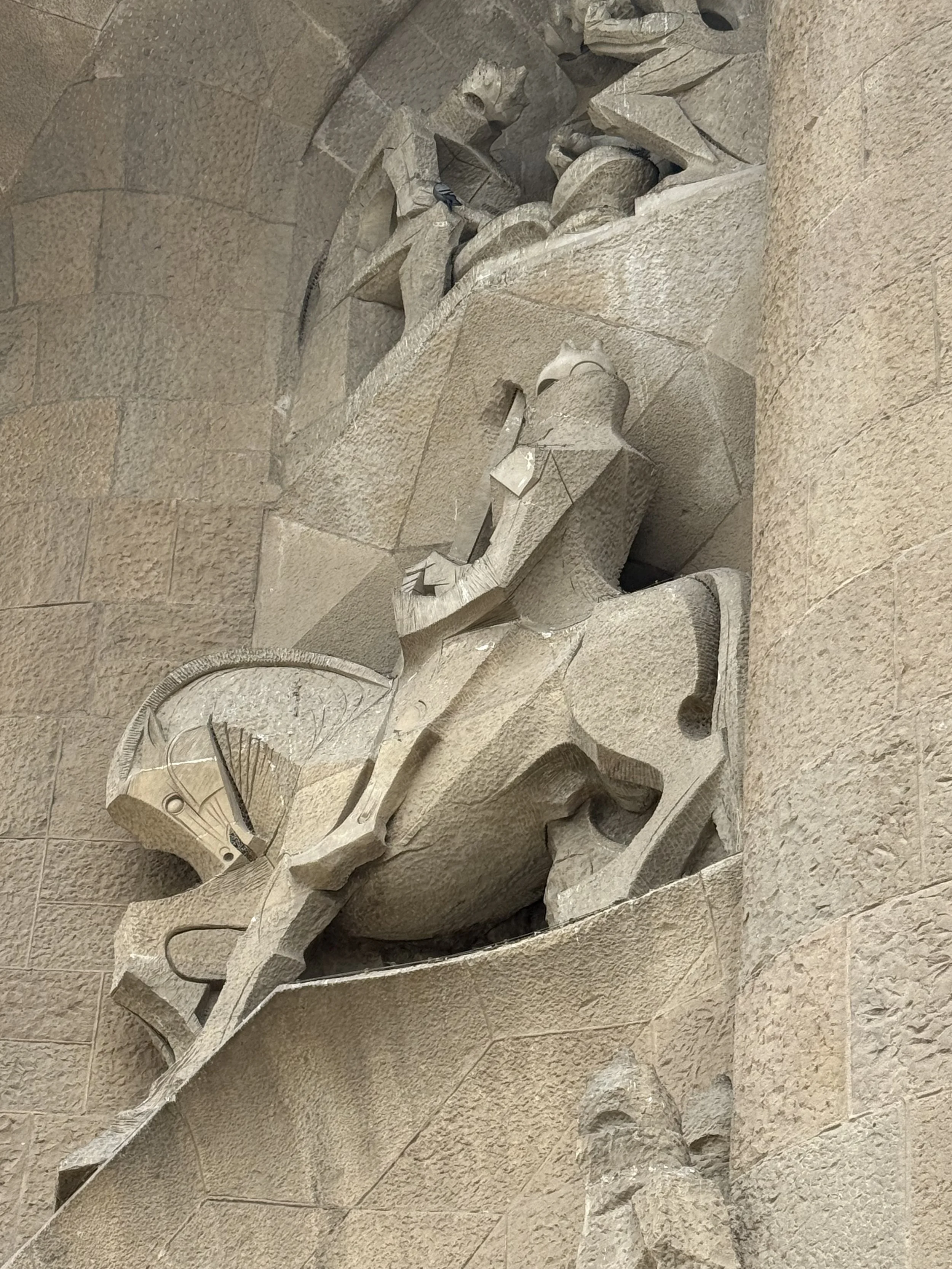
Antoni: You know, Cesca – is it ok if I call you Cesca? – Gothic cathedrals took 400 years to build, so what is another ten or twenty years? The Sagrada Família will be here for eternity, and eternity has the patience of a saint.
Francesca: Your style is so unique. Where did you get your ideas from?
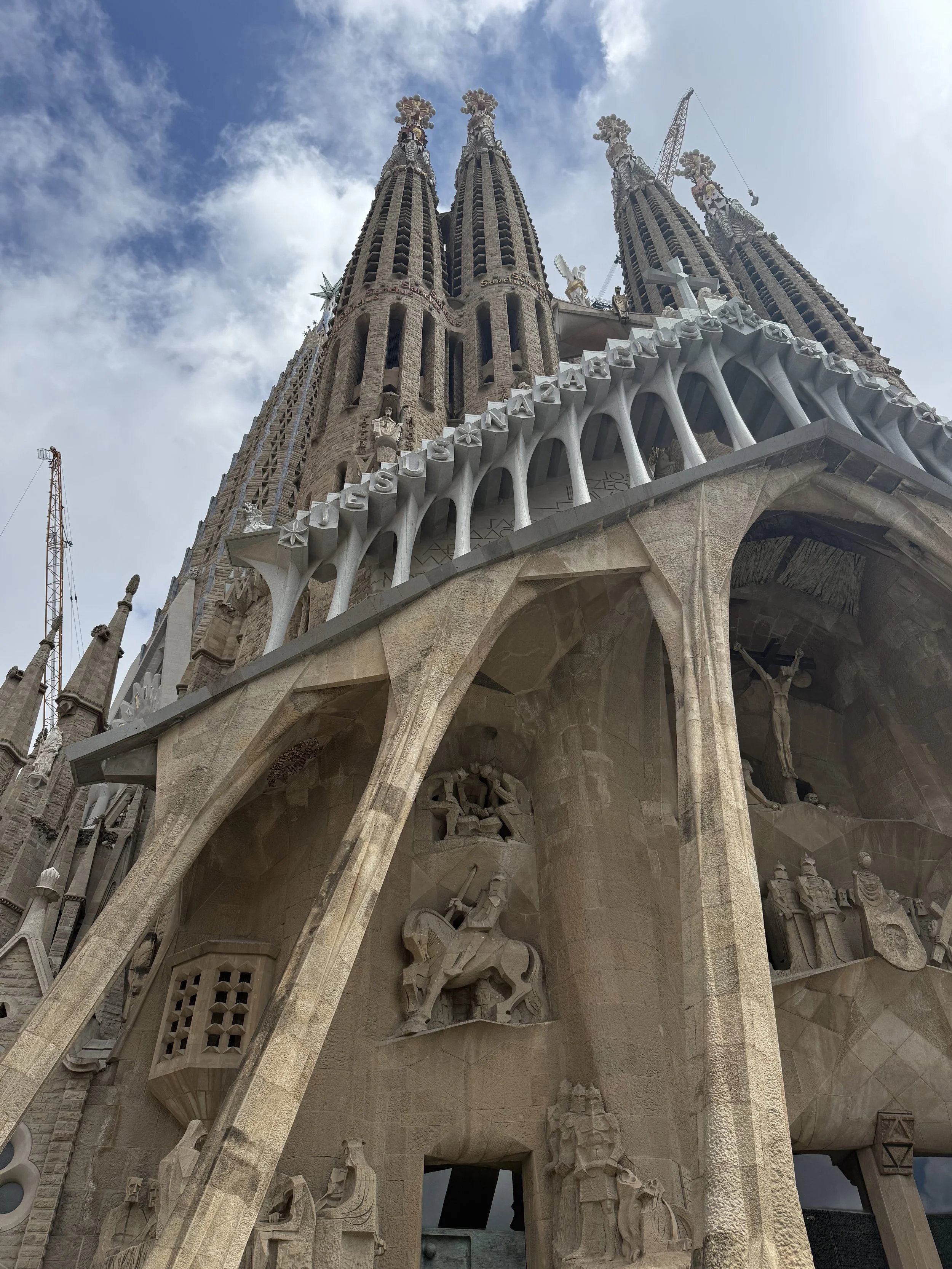
Antoni: I was ill with rheumatism when I was a child, so I couldn't run around like other kids. So, I sat and observed. I picked up snails and admired the curve of their shells. I collected leaves and drew them meticulously. I watched how snakes slithered, how waves rolled and frothed. When I became an architect, I was determined to incorporate nature into my designs. And as I mentioned earlier, nothing in nature is straight. My designs celebrate the beauty of nature.
Francesca: You were deeply religious. Did faith play a big part in your work?
Antoni: Faith surrounded me every step of the way. The Sagrada Família is a prayer, a hymn to God and His work. I wanted people to step into the cathedral and to feel His presence in the light, in the spires and columns, and in – as you called them! – every single little squiggle. I am both proud and grateful that people come from all over the world and queue for hours to see my work. When I was alive, many people told me I was crazy. Now you can buy keyrings and tee-shirts with my face on them! Ha!
Francesca: Do you have any advice for the architects and the creatives of today?
Antoni: Oh yes! My advice is to stop staring at those screens and go outside. Sit there and observe. Touch trees, caress flowers, watch how a raindrop spirals when it hits water. Admire curves! Now, everywhere I look I see glass and steel. Everything is straight and boring. So go out there and celebrate curves. Get a little funky. Be more daring. Have fun! God left instructions everywhere; all you have to do is slow down and look around to be inspired.
Francesca: Thank you, Antoni, for being my guest. It has been a real pleasure, and a lot of fun. I see your dragon prancing around outside, so it must be time for you to go. I wish you a safe trip back, and a good rest.
Antoni: Thank you, Francesca. I enjoyed our conversation, and now that you are feeling better I look forward to seeing you visit my other fabulous creations. Goodbye for now.
And with that, Antoni Gaudí was gone.
I hope you enjoyed this episode of 'How On Earth', possibly the first of a series. If have any questions about my conversation with Antoni, please let me know.
With love and gratitude,
Francesca xx